

1. Task overview
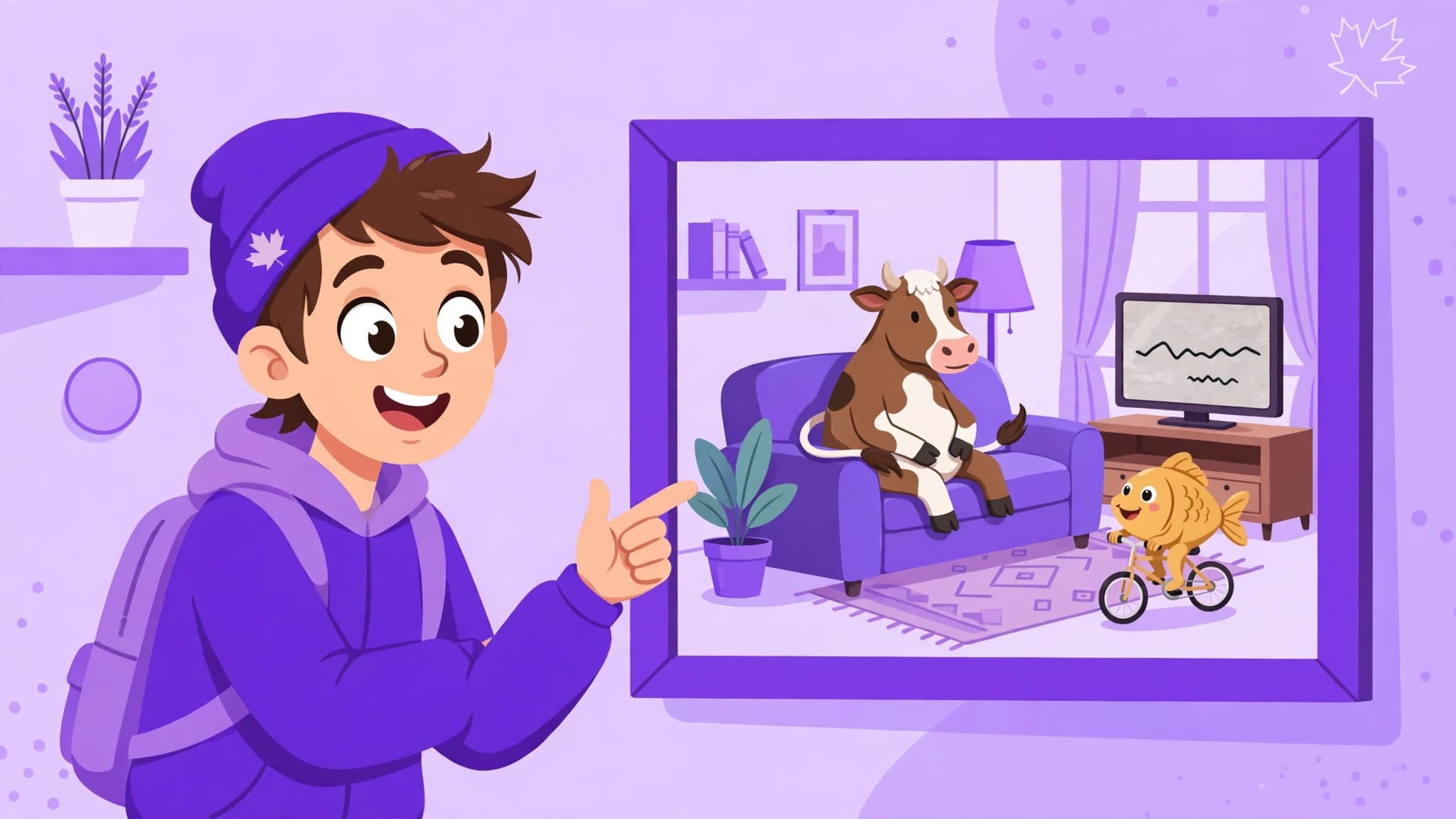
Describing an Unusual Situation is Task 8 of the CELPIP Speaking test, the last task. You see a picture of a strange object or an unusual scene. Unusual means it is not normal or common. You describe it to another person who cannot see the picture.
Because the other person cannot see it, your words must build the picture in their mind. This task tests your vocabulary for describing things: size, shape, colour, parts, and use. It also tests if you can organize a description in a clear order.
2. Facts box
| Item | Detail |
|---|---|
| Time for this part | About 1.5 minutes in total |
| Questions | 1 question |
| Format | You see a picture of an unusual object or scene and record a spoken description for a person who cannot see it |
| Preparation | 30 seconds to prepare your answer |
| Speaking | 60 seconds |
| Replay | There is no replay. Your recording is saved once |
3. Task structure
- • The picture. You see one picture with a strange object or scene. In your preparation time, look at the whole picture first, then at the small parts.
- • Your answer (60 seconds). You describe what you see. Start with the general picture, then give details in a clear order, for example from top to bottom.
- • The listener. Remember: the person you speak to cannot see anything. Every important detail must come from your words.
4. What to expect
- • The object or scene is strange on purpose. It may be a mix of two familiar things, or a normal thing in a strange place or size.
- • You may not know the exact English name of the object. That is normal, and it is part of the task. You score by describing, not by naming.
- • The picture has many details. You cannot say everything in 60 seconds. Choose the most important details in a good order.
5. Strategies and tips
- 1. Decide what it is, in general words, first. In your preparation time, choose a simple first sentence, for example "It is a strange machine" or "It looks like a small house, but in a tree."
- 2. Compare it with familiar things. Comparisons help the listener imagine the object. Use sentences like "It's about the size of a car" and "It looks like a bicycle crossed with a boat." Crossed with means a mix of two things.
- 3. Plan your order before you speak. Go from top to bottom, or from general things to small details. A clear order stops you from jumping around the picture.
- 4. Prepare words for shape, colour, parts, and use. Think of the main colours, the shape (round, square, long, flat), the parts you can see, and what the object is probably used for.
- 5. Keep describing until the end. If you finish the main parts early, add smaller details: materials, position, background, or what is next to the object.
Suggested timing inside the speaking minute: about 10 seconds to say what it is in general, about 15 seconds for size and comparisons, about 25 seconds for shape, colour, and parts in order, and about 10 seconds for its use and a short close.
6. Scoring
Trained human raters listen to your recording later. They score four things:
- • Content and Coherence. Coherence means your ideas connect in a clear order. In this task, a clear describing order, for example top to bottom, makes your answer easy to follow.
- • Vocabulary. This task tests describing words more than any other task. Words for size, shape, colour, parts, position, and use all help your score.
- • Listenability. This is how easy it is to listen to you. Raters listen to your rhythm, your pronunciation, your pauses, your grammar, and if you use different kinds of sentences.
- • Task Fulfillment. You do what the task asks. The listener could imagine the object or scene from your words alone, without seeing the picture.
A lower level answer usually gives a few short sentences with very general words, for example "It is a strange thing. It is big." A higher level answer uses comparisons and specific describing words, in a clear order, so the listener can really picture the object.
7. How to build an answer
How to start. Say what the picture shows in one general sentence. If you do not know the name of the object, describe its type, for example "It looks like a kind of vehicle" or "It is a strange small building."
How to develop. Give the size with a comparison. Then describe the parts in your planned order, top to bottom or general to detail. Add colours and shapes as you go. Say what each part is probably for, if you can guess.
How to finish. End with the use of the object, or with your general feeling about the scene, in one short sentence. For example: "I think people use it to travel on water in a fun way."
One general framework:
- 1. Say what it is, in general words.
- 2. Give its size, with a comparison to a familiar thing.
- 3. Describe its shape, colour, and parts, in order from top to bottom.
- 4. Say what it is used for, or what is happening in the scene.
- 5. Close with one short general sentence.
A framework is a starting structure, not a script to memorize. Raters can hear memorized scripts, and scripts can pull your answer away from the question. Use the framework to organize your own ideas. On Celpip Easy, the AI feedback on your speaking practice gives you personal help with your own answers, so you do not need to copy a fixed text.
8. Mistakes learners make in this task
- • Trying to find the exact name. If you spend your time searching for one perfect word, you lose your description time. Describe it. Naming is not the goal.
- • No clear order. If you jump from the top of the picture to the bottom and back, the listener gets lost. Pick one order and follow it.
- • Forgetting the listener cannot see it. Words like "this one here" mean nothing to the listener. Say where things are: on the left, at the top, in the middle, next to.
- • No comparisons. Without a comparison, the listener cannot imagine the size. Always compare the size with a familiar thing.
- • Too few details. Short answers with general words, like "big" and "strange" only, score lower. Add shape, colour, parts, and position.
- • Memorizing a template. A memorized description cannot fit a picture you have never seen. Raters recognize templates, and they can lower your score.
- • Silence. Do not stop and say nothing. If you lose a word, describe the thing in simpler words and keep talking.
9. Practice this task
Reading about the task is step one. The skill comes from doing it under real timing: 30 seconds to prepare and 60 seconds to describe, in a clear order, with comparisons.