

1. Task overview
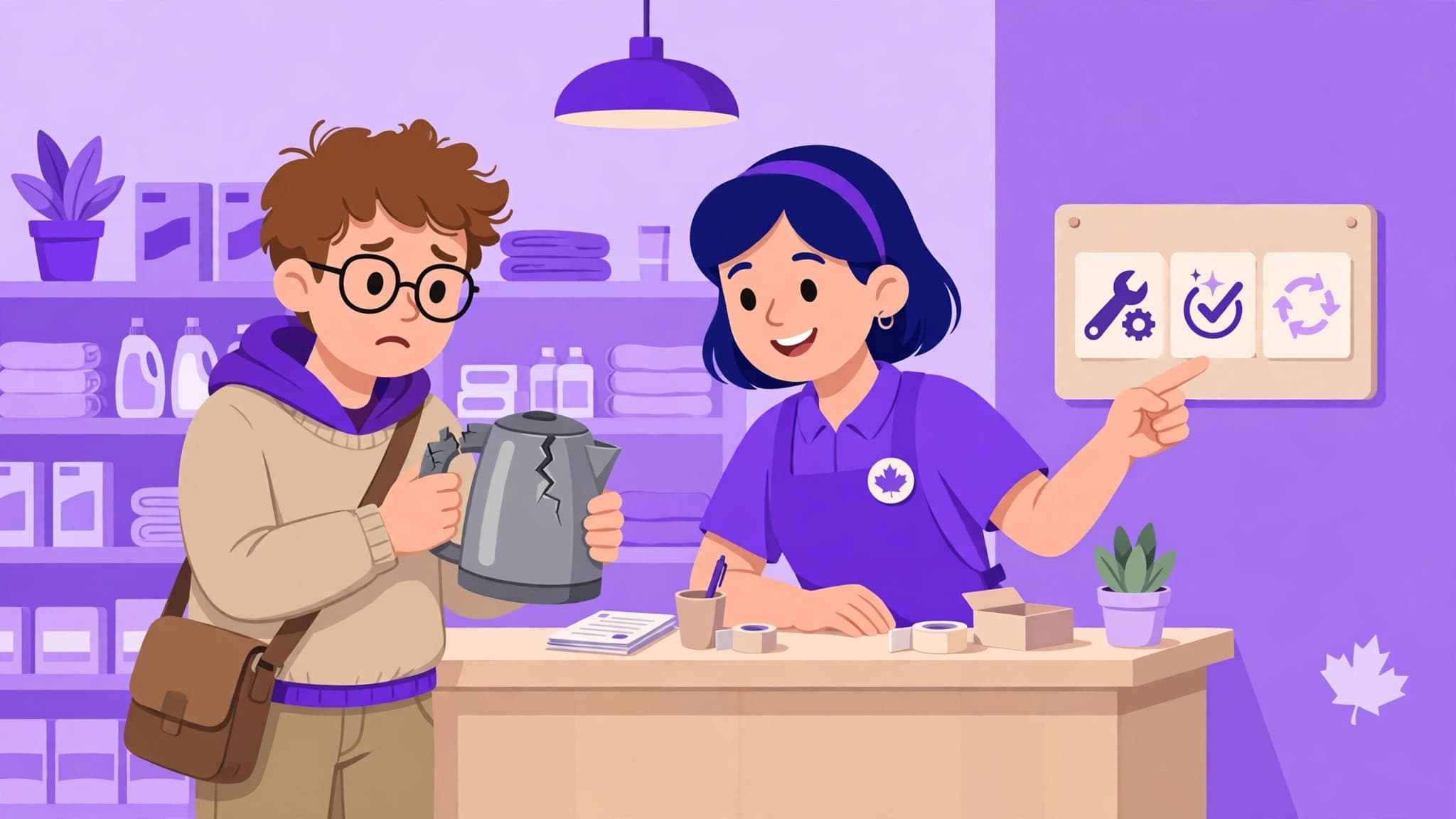
Listening to Problem Solving is Part 1 of the CELPIP Listening test. You hear two people talk. One person has a problem. The other person tries to help. The conversation has three sections. After each section, you answer questions about the part you just heard.
This part tests if you can follow a real conversation. You need to understand the problem. You need to follow the ideas for help. You also need to hear when a speaker corrects something. At the end, you need to know the final decision. The test speaks the questions to you. For most questions, you only see the four answer choices on the screen. So your memory and your notes are very important.
2. Facts box
| Item | Detail |
|---|---|
| Time for this part | About 7 to 8 minutes. This time also includes time to answer the questions. |
| Questions | 8 |
| Format | One conversation with three sections. Questions come after each section. |
| Speakers | Two speakers. Usually one man and one woman. |
| Answers | Multiple choice. You hear each question one time. You have about 30 seconds for each question. |
| Replay | You hear the recording one time only, like the real test. |
3. Task structure
- • Section 1 tells you the situation and the main problem. You will answer 3 questions.
- • Section 2 gives more details about the problem. You hear possible ideas. A speaker often corrects or changes something. Listen for words like "actually", "I mean", and "no, wait". You will answer 3 questions.
- • Section 3 moves to a decision or a final result. You will answer 2 questions.
The questions follow the order of the conversation. The test asks about the first part first. So take notes in order. Then your notes will match the order of the questions.
4. What to expect
- • Everyday places: a store, an office, or a service desk. The speakers can be colleagues or friends. Colleagues are people you work with.
- • One speaker has the problem. The other speaker gives information, ideas, or advice. You must know who is who. Many questions ask about who said what.
- • The speakers sound polite and natural, like real speech. They may stop and think. They may correct words. They may change a plan in the middle of a sentence.
- • Small details are important. Listen for times, prices, names, conditions, and reasons. The test often asks about them.
5. Strategies and tips
- 1. Start listening from the first second. You cannot see the questions before you listen. The speakers usually say the main problem early. If you miss the start, the rest is hard to follow.
- 2. Name the problem in your notes. Write the problem in three or four words. Write it as soon as you hear it. Most questions are about this problem.
- 3. Track the two roles separately. Draw a line in the middle of your notes. Put the person with the problem on the left. Put the helper on the right. Write each fact under the person who said it.
- 4. Write corrections as replacements. When a speaker corrects something, cross out the first words. Write the new words. Questions often test the new, correct words. The first words often appear in a wrong answer.
- 5. Listen for the final decision. Plans can change in the conversation. The correct answer is usually the final decision at the end of a section. It is not usually the first idea.
- 6. Note strong and weak language. Words like "definitely", "maybe", "not really", and "I would not say" show how sure a speaker is. They also show how positive a speaker feels. Questions about attitude need this information. Attitude means how a speaker feels about something.
- 7. Use the 30 seconds well. First, answer the question. Then use the other seconds to look at your notes. Get ready for the next section. Do not spend time on old answers.
A good time plan for this part: listen and take notes in each section. You cannot pause the recording. Then answer each question in about 20 seconds. Keep 10 seconds to get your notes ready for the next section.
6. Scoring
The Listening test has 38 questions in six parts. Each question counts one time. The test changes your number of correct answers into a CELPIP level from 1 to 12. The CELPIP level has the same number as the CLB level for this skill.
Paragon gives an example chart for this change. Here are some example rows:
| CELPIP level | Correct answers out of 38 |
|---|---|
| 10 to 12 | 35 to 38 |
| 9 | 33 to 35 |
| 8 | 30 to 33 |
| 7 | 27 to 31 |
The number ranges overlap. This is because the change is a little different for each test. An easy test and a hard test are not exactly the same. Use the chart as a guide only. It is not a promise. This part has 8 of the 38 questions. So if you lose focus here, you can lose more than one fifth of your total Listening score.
7. Mistakes learners make in this task
The wrong answers in this part follow clear patterns. You can learn each pattern. The Course section has a full lesson for each pattern, with practice questions for you.
- • Keyword Mirror: a word from the recording, but with the wrong time, person, or reason. It is not enough to hear the word.
- • Wrong Speaker: the plan of the person with the problem, but the answer says the helper said it. Or the opposite. Keep the two speakers separate in your notes.
- • Partial Truth: a true small detail, but it is not the real reason for the visit.
- • Logical Extension: a normal solution from real life. The answer choice makes it up. Nobody in the recording said it.
- • Overstatement: the advice sounds stronger in the answer than in the recording. It sounds more urgent or more sure than it really was.
- • Opposite: an answer that says the opposite of the final decision.
- • Fabricated: a detail that sounds true and official, but nobody in the recording said it.
- • Scope Shift: a true fact from the conversation, but it answers a different question.
- • Self-Correction: the first words from before a correction, like "actually" or "I mean". The answer uses the old words as the final answer.
- • Attitude Misread: you hear one feeling, like busy, polite, or not sure, but you choose a different feeling.
8. Practice this task
Reading about the task is the first step. You learn the skill when you practise. Practise with real test timing, and play the recording one time only.